

Why Ditch Plastic SIMs on Your Next Trip
Why an eSIM Is the Smartest Travel Upgrade for Your Next Trip
You can buy a data plan for your destination before you even leave home. An eSIM eliminates the need to swap physical SIM cards entirely. This means instant connectivity the moment you land, without hunting for local shops or dealing with international roaming China eSIM fees.
Why Ditch Plastic SIMs on Your Next Trip
You’re standing at the arrivals gate in a new country, juggling luggage and a paper slip with PIN codes for a local plastic SIM. Ditching that fragile physical card for an eSIM means you’re connected before you even land. No more hunting for a kiosk or struggling to fit a tiny chip into your phone’s tray. You buy a travel data plan online, scan a QR code, and that’s it—your service activates automatically the moment your plane touches down, saving you the hassle of carrying extra adapters or remembering where you stashed your original SIM. You don’t realize how liberating it is until you’re swapping networks mid-trip without ever opening your device.
Instant connectivity without hunting for local stores
The primary advantage of avoiding physical SIMs is the elimination of time wasted searching for local mobile stores after arrival. With an eSIM, instant connectivity upon landing becomes a reality, as you activate a plan before departure or scan a QR code at the gate. This contrasts sharply with the risk of airport kiosk lines, incompatible store hours, or language barriers that complicate purchasing. The critical nuance is that this speed preserves the first hours of a trip for exploration, not errands. Instead of hunting for a specific retailer, you select a data plan from your seat, providing immediate access to maps and transport apps the moment you switch off airplane mode.
No more swapping SIMs or losing your primary number
With an eSIM, you keep your primary number active while adding a local data plan, ending the hassle of juggling physical cards. No more swapping SIMs means you avoid losing access to banking apps, two-factor authentication, or emergency contacts tied to your home number. The process is straightforward: dual-SIM functionality lets your primary line receive calls and texts over Wi-Fi while you use local data. Simply purchase an eSIM plan before departure, scan a QR code, and both profiles work simultaneously. Your home number stays connected for essential services without interruption.
How Global Data Plans Actually Work Abroad
When you activate an eSIM for travel, a global data plan typically works by relying on a network of roaming agreements between your eSIM provider and multiple local carriers in your destination country. Upon arrival, your device automatically connects to a partner network, and your traffic is routed through a virtual home network or direct peering, often via an IPX (Internetwork Packet Exchange) hub. The provider buys wholesale data capacity in bulk from these local operators, then resells it to you at a fixed rate for the duration of your plan. This means you avoid physical SIM swapping but your connection speed and latency depend on which local tower your eSIM links to.
A key insight: your global plan does not offer “unlimited high-speed” everywhere; providers often apply a fair-use cap—typically 0.5–2GB per day at 4G/5G, after which speeds throttle to 128–256 kbps for basic messaging and mapping.
Billing is usage-based, controlled by your eSIM app, and the plan stops exactly when the data allowance depletes or your time window expires.
Regional vs. global coverage maps explained
When selecting an eSIM for travel, understanding regional vs. global coverage maps is critical to avoid connectivity gaps. A regional map bundles countries within a specific geographic zone—like Europe or Southeast Asia—into a single plan, offering predictable pricing for multi-destination trips within that zone. A global map, conversely, stitches together partners across continents, often including more remote countries but at a higher cost per gigabyte. Never assume that a “global” coverage map includes every nation in its stated region, as some carriers exclude premium locations like Japan or Australia. Match your itinerary’s precise country list against the provider’s detailed map, not just the plan’s title.
| Aspect | Regional Coverage Map | Global Coverage Map |
|---|---|---|
| Scope | Limited to one geographic zone | Multiple continents |
| Cost | Lower per GB | Higher per GB |
| Best for | Single-region trips | Cross-continent travel |
| Hidden gaps | Uncommon within listed countries | Occasional country exclusions |
Data speeds, throttling, and fair usage policies
When using an eSIM abroad, your data speeds depend heavily on the local network, but throttling often kicks in after you hit a soft cap. Many global eSIM plans advertise “unlimited data,” but a fair usage policy will slow you down—sometimes to 2G or 3G speeds—once you pass a certain daily or monthly limit. This throttling can make streaming or video calls frustrating, so check exactly when the slowdown starts. For heavy users, look for plans with high-speed data caps that clearly state when throttling begins, avoiding nasty surprises at the airport.
Picking the Right Provider for Your Itinerary
When picking the right provider for your itinerary, first check if their eSIM for travel supports every country on your list. Some plans cover popular hubs like France or Japan but skip smaller stops. Always verify the specific network partners in your destinations, not just the country count.
Next, match the data allowance to your habits—heavy streaming demands a larger plan, while navigation and messaging need less. Look for flexible top-ups if your itinerary changes. Finally, ensure the provider offers immediate delivery and easy installation, so you’re connected the moment you land.
Comparing major carriers and digital-only brands
When comparing major carriers and digital-only brands for travel eSIMs, major carriers like T-Mobile or Vodafone typically offer robust network priority and native roaming, ensuring consistent speeds in their home regions. Digital-only brands like Airalo or Holafly often provide cheaper, flexible data packs but may throttle speeds during congestion. To choose correctly:
- Check if your itinerary covers a single country or multiple regions; digital brands excel at multi-country regional plans.
- Verify coverage depth—major carriers usually penetrate rural areas better, while digital brands lean on aggregated networks.
- Assess data urgency; digital eSIMs activate instantly, whereas carrier eSIMs might require pre-trip account setup.
Pay-as-you-go versus pre-purchased data packages
Choosing between pay-as-you-go and pre-purchased data packages depends on your travel habits. Pre-purchased data packages offer a fixed amount of data for a set price, ideal for predictable usage and avoiding overage fees. Pay-as-you-go plans charge per megabyte used, suiting light users or those with variable needs, though costs can escalate with heavy consumption. Real-time usage tracking is crucial for pay-as-you-go to prevent bill shock. Pre-purchased plans provide budget certainty, while pay-as-you-go offers flexibility but risks higher costs.
- Pre-purchased: Lower per-gigabyte rate, but unused data expires.
- Pay-as-you-go: No upfront commitment, but higher per-megabyte cost.
- Top-up ease: Pre-purchased often requires buying a new package; pay-as-you-go allows instant top-ups.
For a short trip with heavy streaming, a pre-purchased package almost always proves more economical than unpredictable pay-as-you-go rates.
Activation Steps Before You Board
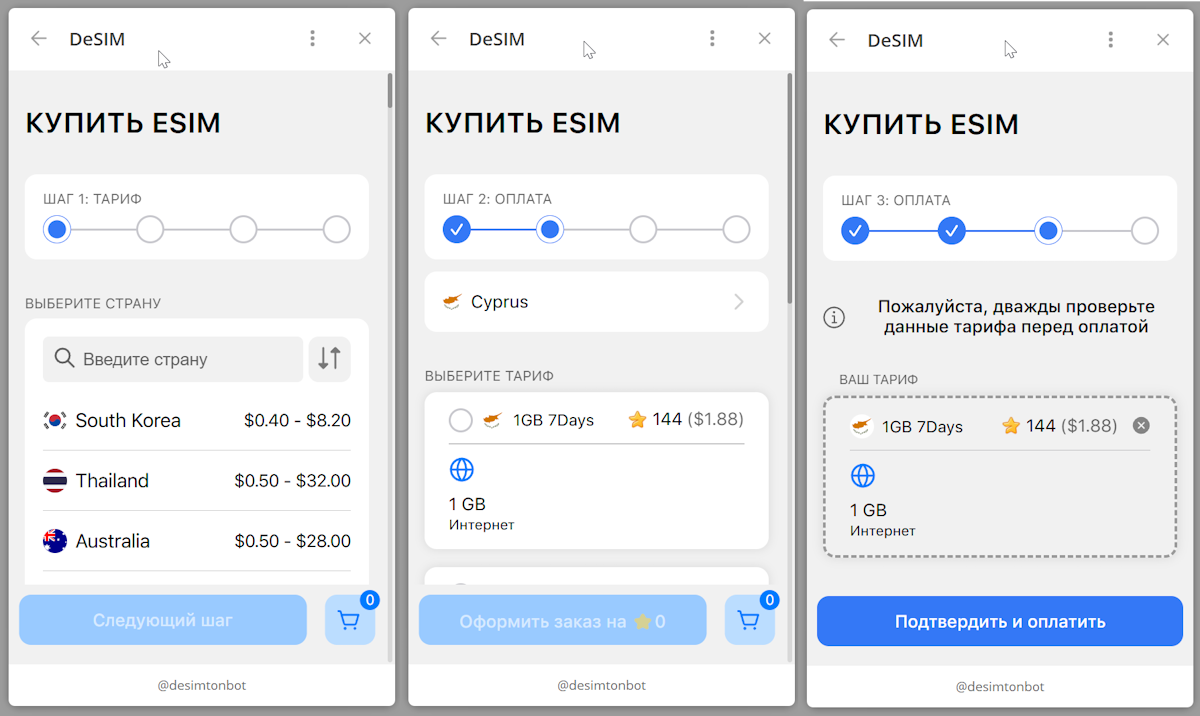
Before you board, ensure your device is unlocked and compatible with your chosen eSIM. First, purchase and install the eSIM profile via the provider’s app or QR code, using a stable Wi-Fi connection. Next, set the eSIM as your primary data line in your device’s cellular settings, keeping your home SIM active for calls. *Crucially, disable automatic network selection and manually choose the local carrier upon arrival to avoid roaming charges.* Finally, toggle data roaming on for the eSIM only, then activate your plan’s start date manually if you haven’t set it to begin at landing. Verify the connection by sending a test message or browsing a lightweight site while still at the gate. Complete these steps before you board to eliminate any last-minute setup stress.
Setting up a profile on your smartphone
Setting up a profile on your smartphone is the final step of your eSIM activation before boarding. After scanning the QR code or downloading the eSIM file, navigate to your device’s cellular settings. Tap “Add Cellular Plan,” then label your new eSIM profile—typically by destination, like “Spain Trip.” This distinguishes it from your primary home line. To avoid roaming charges, assign your home line for calls and SMS, while setting the travel eSIM as your primary data line. Ensure mobile data switching is toggled off to prevent accidental fallback. Finally, name the profile clearly for easy management.
- Go to Settings > Cellular/Mobile Data on your smartphone.
- Select “Add Cellular Plan” and scan the eSIM QR code.
- Label the profile, then set this travel plan as the default data line.
- Turn off “Allow Cellular Data Switching” to block your home line from using data.
What to do if activation fails mid-journey
If activation fails mid-journey, immediately switch your device to Airplane Mode for 30 seconds, then reconnect to the local network. Next, manually enter the APN settings from your provider’s confirmation email; often a missing or incorrect APN is the culprit. If still offline, delete the eSIM profile from your device’s cellular settings, re-scan the original QR code, and download it again—this forces a fresh remote provisioning retry. For persistent failure, activate a backup eSIM or local prepaid SIM to restore connectivity while contacting support via Wi-Fi. Never reboot the phone after multiple failed attempts without first deleting the eSIM, as the device can lock the profile.
In summary: toggle Airplane Mode, check APN, delete and reinstall the eSIM profile, then use a backup connection to contact support.
Managing Costs Across Multiple Destinations
Managing costs across multiple destinations with an eSIM requires strategic local or regional data plan selection rather than relying on costly global roaming. Instead of buying a single, expensive international plan, activate a multi-country eSIM or purchase individual country-specific packages for just the days you are there. This avoids paying for unused coverage in places you aren’t visiting. Remember to turn off background data for non-essential apps and download offline maps before crossing borders.
The key insight is to prioritize local pricing over convenience, as a bundle covering five countries often costs less than a single week of standard roaming in just one.
Top-ups and plan extensions while roaming
When managing costs across multiple destinations, topping up your eSIM while roaming is typically done through the provider’s app or portal, allowing immediate data replenishment without changing SIMs. Plan extensions, conversely, let you add days to an active travel package, which can prevent losing unused data at a destination’s border. Some providers allow you to mix a top-up for extra high-speed data with an extension for more duration on the same plan. Always check if your eSIM supports stacking multiple top-ups on a single profile, as some reset the data limit while others simply add volume. A clear comparison helps:
| Action | Key Use Case | Effect on Remaining Data |
|---|---|---|
| Top-up | Running low on high-speed data | Adds new data block (may not retain unused balance) |
| Extension | Staying longer than plan duration | Keeps existing data, adds validity days |
Avoiding surprise charges from background data use
To dodge nasty surprises, always turn off background app refresh and system services like iCloud sync before you hop on the plane. Many apps sneakily pull data without you noticing, which can drain your eSIM plan fast. The golden rule is to manually set your phone to disable cellular data for specific apps, keeping only essentials like maps or messaging active. This prevents automatic data drain while you’re browsing shops or navigating a new city, ensuring your budget doesn’t vanish due to silent updates or photo backups.
Device Requirements and Compatibility Checks
Before purchasing an eSIM for travel, you must confirm your smartphone is unlocked and supports eSIM technology, typically found in iPhones XR and newer, Google Pixel 3a and newer, and recent Samsung Galaxy models. Compatibility is not universal, so checking your device’s IMEI with the provider’s list is essential, as some carriers lock eSIM functionality. Even on compatible devices, dual-SIM usage may disable other cellular features, depending on the phone’s firmware. Additionally, you need to ensure your phone’s operating system version is updated to support eSIM profile installation, as older OS builds can cause activation failures. Always verify these hardware and software requirements before departure to avoid arriving without connectivity, relying solely on a stable Wi-Fi connection for setup.
Which phones, tablets, and laptops support embedded chips
For travel eSIM use, embedded chip support is primarily found in recent flagship phones like the iPhone XS and later, Google Pixel 3a and newer models, and Samsung Galaxy S20 and Z series. Most modern iPads, including the iPad Air and Pro models since 2019, also include embedded eSIM chips, though some international variants retain physical slots. Laptop support remains limited; recent Windows 11 devices such as the Surface Pro 10 and Lenovo ThinkPad X1 Carbon Gen 11 offer embedded eSIM, while Apple’s MacBooks do not. Always verify your device model’s eSIM compatibility list before traveling, as carrier support varies by region.
Unlocking restrictions and carrier limitations
Before buying an eSIM for travel, you need to check if your phone is carrier-unlocked. Locked devices can’t accept a foreign eSIM, so confirm this in your settings first. Carrier limitations also pop up if your phone was financed—it may remain locked until paid off. To avoid headaches:
- Check your phone’s status under “Carrier Lock” in Settings.
- Request an unlock code from your carrier if needed.
- Insert a foreign eSIM only after the unlock is fully verified.
Phones from US carriers often need a specific unlock request, not just a factory reset.
Keeping Your Primary Number Active Simultaneously
Using an eSIM for travel lets you keep your primary number active simultaneously on your device. This means you add a local data eSIM for your destination while your physical SIM or home eSIM stays live for calls and SMS, often via Wi-Fi Calling. The key insight is you avoid swapping cards or losing access to banking codes, yet still pay no roaming fees for data.
Your primary line operates in the background solely for essential verification and iMessage, while the travel eSIM handles all internet traffic.
To achieve this, ensure your carrier supports dual SIM (DSDS) and that your primary line’s settings allow cellular data switching to the secondary eSIM.
Dual SIM setups for calls, texts, and WhatsApp
For seamless travel communication, a Dual SIM setup for calls, texts, and WhatsApp lets you insert a local data eSIM while keeping your primary physical SIM active. Your home number remains reachable for legacy calls and texts, while WhatsApp runs fully on the travel data eSIM, bypassing roaming fees. This avoids the hassle of notifying contacts of a temporary number because WhatsApp verifies via your primary SIM without physical swaps.
- Configure your primary SIM for voice and SMS, then designate the eSIM solely for mobile data to power WhatsApp.
- Disable data roaming on your primary SIM to prevent accidental charges while it remains active for calls.
- Ensure your iPhone allows simultaneous use of both lines; most Android devices also support this directly in settings.
- Test outgoing WhatsApp messages before departure to confirm they route via the eSIM’s data connection.
Using iMessage or RCS across both lines
For travelers using a secondary eSIM, keeping iMessage or RCS active across both lines requires careful setup. On iPhone, ensure your primary number is set for iMessage and FaceTime in Settings, while leaving cellular data switched to the eSIM line. This allows iMessage to route through your home number over the eSIM’s data, avoiding SMS fees. On Android, RCS must be manually linked to your primary number in the Messages app; disable auto-detect for the eSIM’s local number to prevent fragmentation. Both services will function seamlessly over the secondary data connection as long as the primary line remains active for registration.
Security and Privacy While Roaming Abroad
Using an eSIM for travel enhances security by eliminating the need to insert a physical SIM card from a local provider, which could be tampered with or cloned. Your primary home number remains secure on the eSIM, while you use a local data plan from a trusted provider. Avoid connecting to unsecured public Wi-Fi; your eSIM’s data connection is inherently more private. Q: Should I use a VPN with an eSIM? A: Yes, a VPN encrypts traffic beyond the cellular network, adding a privacy layer against local surveillance. Always purchase eSIMs from official sources to prevent malicious profiles from intercepting your data. Never share your eSIM activation QR code, as this grants direct access to your cellular identity.
Encrypted connections and public Wi-Fi risks
When roaming with an eSIM, your data travels over a direct cellular link, but using public Wi-Fi alongside introduces significant risks. Hackers deploy rogue hotspots on unencrypted networks to intercept your browsing, credentials, and messages—a threat that persists even when connected via eSIM. To stay safe, always activate a VPN to create a secure, encrypted tunnel over any open Wi-Fi. Never access banking or private accounts without this protection. Treat free airport or café Wi-Fi as inherently hostile, as they expose your session to packet sniffing and man-in-the-middle attacks. Your eSIM’s data channel is encrypted, but your public Wi-Fi traffic is not.
Encrypted connections via a VPN are essential when using public Wi-Fi on travel eSIMs, as unsecured hotspots directly expose your data to interception and theft.
What happens to your travel data after you return
Once you return, your travel eSIM profile and associated data typically do not persist. The eSIM is deactivated or expires according to your plan’s duration, severing network access. However, your travel data retention policies depend on the provider: some immediately purge your usage logs and location history after plan expiry, while others may store anonymized metadata for billing reconciliation for a short period. Your personal information, such as passport details used during activation, is generally retained by the eSIM vendor only as long as legally required for your account, then erased. Critically, no roaming data remains on your device after deactivation unless you manually keep the eSIM profile installed.
Common Pitfalls First-Time Users Encounter
First-timers often buy an eSIM without checking if their phone is actually unlocked, then panic at the airport when it won’t activate. Another common snag is installing the profile before the trip—do this at home over Wi-Fi, not on the tarmac with no data. People also miss the fine print on data speeds, assuming “unlimited” means fast, when it’s often throttled after a small cap. Worse yet, many forget to turn off their primary home SIM’s data roaming to avoid accidental daily charges. Finally, don’t delete the eSIM before your return flight; you’ll need it for maps or a rideshare once you land.
Mistaking QR codes for one-time use only
Many first-time eSIM users mistakenly treat the installation QR code as a one-time-only key, panicking when they need to switch phones or reset their device. In reality, most providers allow you to re-download the eSIM profile by logging into your account, not by scanning the original QR again. Your purchased data plan is linked to your account, not to a single scan event. You can usually re-issue or save the QR code within the provider’s app, or simply download the profile directly without a QR code at all, as long as you keep your login credentials safe.
Forgetting to set the correct APN settings
Forgetting to set the correct APN settings is a frequent snag that completely blocks data connectivity after eSIM activation. Your phone may show signal bars, but without these critical access point details, it cannot route internet traffic. Travelers often waste time assuming the eSIM is faulty when the fix is a simple configuration update. Always input the exact eSIM APN configuration provided by your provider immediately after installation.
- Verify the APN name and field entries match your provider’s guide precisely.
- Save the configuration and reboot your device to force the network to apply the new settings.
- Manually check for any extra fields like username, password, or MMSC that your specific eSIM requires.
- Use a dedicated eSIM management app if manual setup fails, as it often auto-fills correct APN details.

Future Trends Beyond Traditional Roaming
Future travel with eSIMs will shift from temporary data plans to persistent digital subscriptions you carry globally. Instead of buying a new eSIM for each country, you’ll maintain a single, lightweight plan that auto-selects the best local network.
Your eSIM profile could learn your travel patterns, pre-caching maps or translation packs for destinations you visit frequently.
Devices may also share connectivity—your laptop using your phone’s eSIM without tethering hassle. This means less setup time, no hunting for local SIMs, and seamless connectivity that feels like home data, even when bouncing between continents.
eSIM-integrated loyalty programs for frequent flyers
For frequent flyers, eSIM-integrated loyalty programs seamlessly link airline status with in-flight data access. Your elite tier can automatically trigger a complimentary travel data plan upon boarding, eliminating manual voucher redemption. This convergence allows miles earned during flight to directly replenish your eSIM’s data pool for the destination. eSIM-linked loyalty benefits further streamline layovers by offering priority, zero-configuration connectivity across partner lounges. The system recognizes your loyalty profile to provision data without swapping SIMs, ensuring consistent, rewarded service from gate to gate.
Satellite fallback for off-grid destinations
For off-grid destinations, satellite fallback for off-grid connectivity ensures an eSIM’s data plan seamlessly switches to a low-earth-orbit satellite network when no terrestrial tower is available. This process requires a device with a compatible satellite modem or an external terminal paired with the eSIM’s app. Data rates under satellite fallback are significantly lower than 4G, so the eSIM prioritizes critical messaging and location sharing over streaming. An eSIM’s satellite fallback typically auto-selects the most efficient satellite passage, minimizing latency without manual intervention. The user remains on one unified eSIM profile, avoiding separate satellite SIM swaps.
What Exactly Is a Travel eSIM and How Does It Work?
Understanding the difference between a physical SIM and an embedded SIM
The simple activation process: scan a QR code and connect
Key Benefits of Using a Digital SIM for International Trips

Stay connected immediately upon landing without swapping cards
Save money by avoiding expensive roaming fees from home carriers
How to Choose the Right Mobile Data Plan for Your Destination
Comparing coverage areas: regional, global, and single-country plans
Matching data allowances to your travel habits and trip length
Step-by-Step Guide to Setting Up Your First Travel eSIM
Checking device compatibility before you purchase a plan
Installing and activating the profile before or after departure
Practical Tips for Managing Multiple eSIMs on One Device
Keeping your home number active while using a travel data plan
Switching between profiles for different countries during a trip
Common Questions First-Time Users Have About Mobile Connectivity Abroad
What happens if you run out of data mid-trip
How to troubleshoot if the connection doesn’t work immediately
